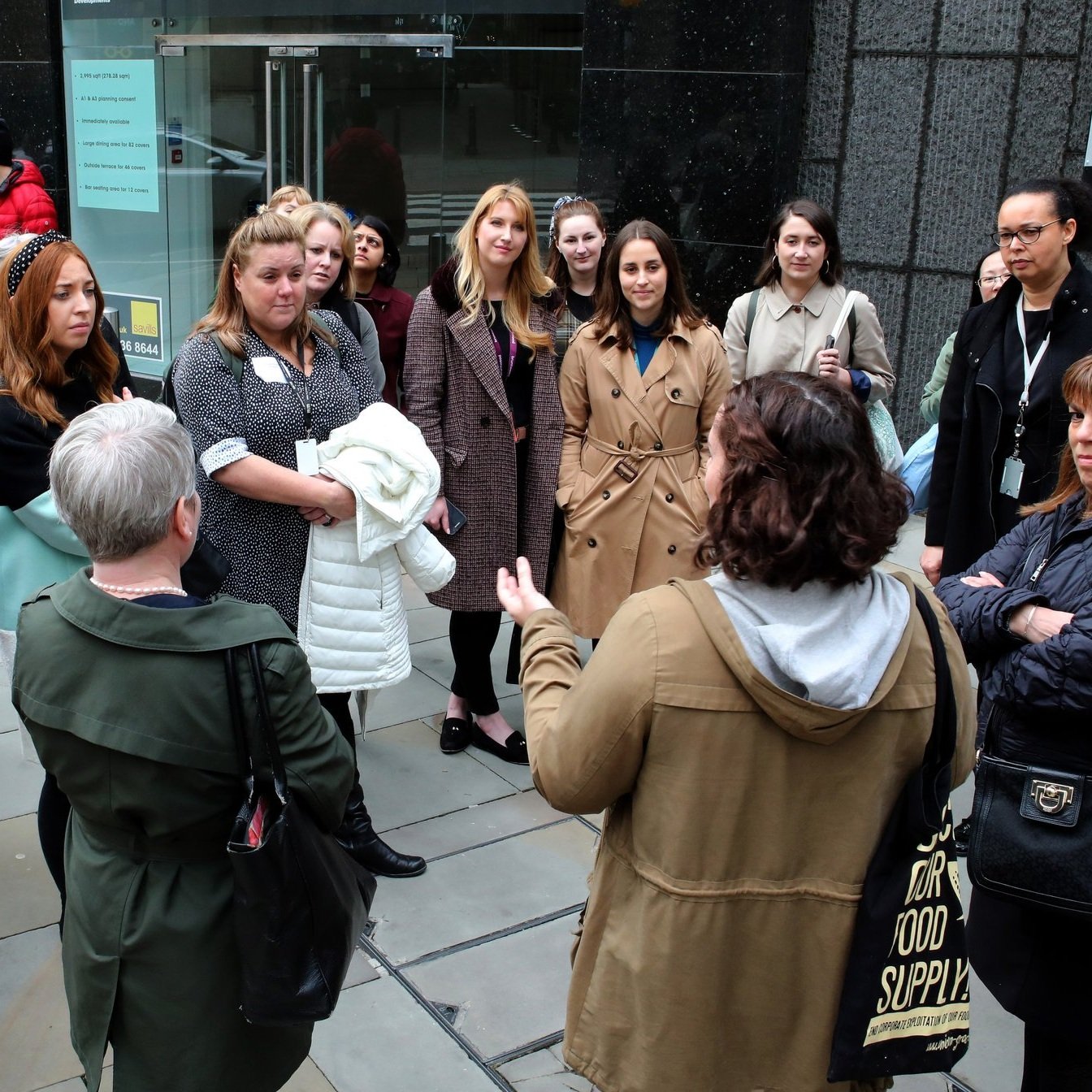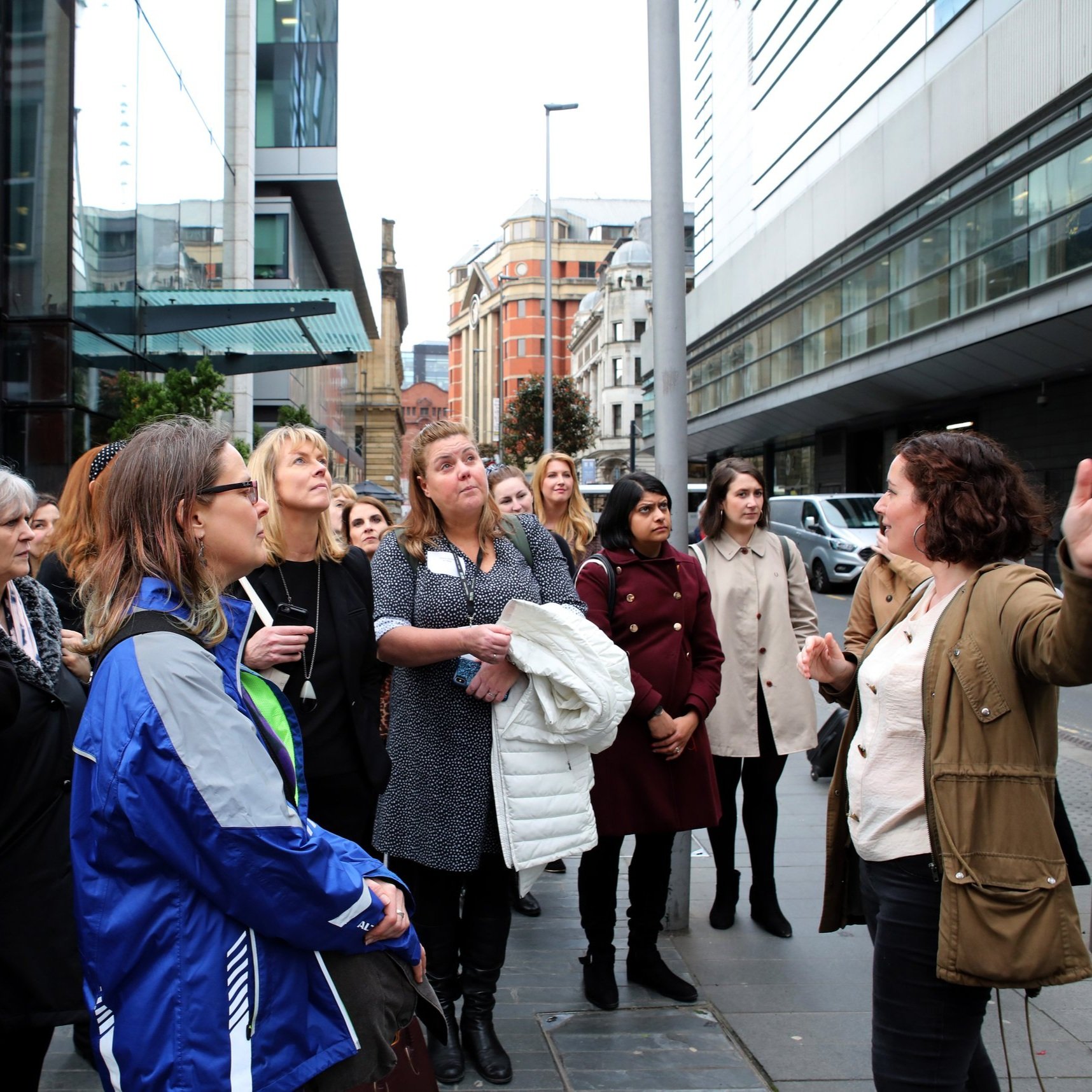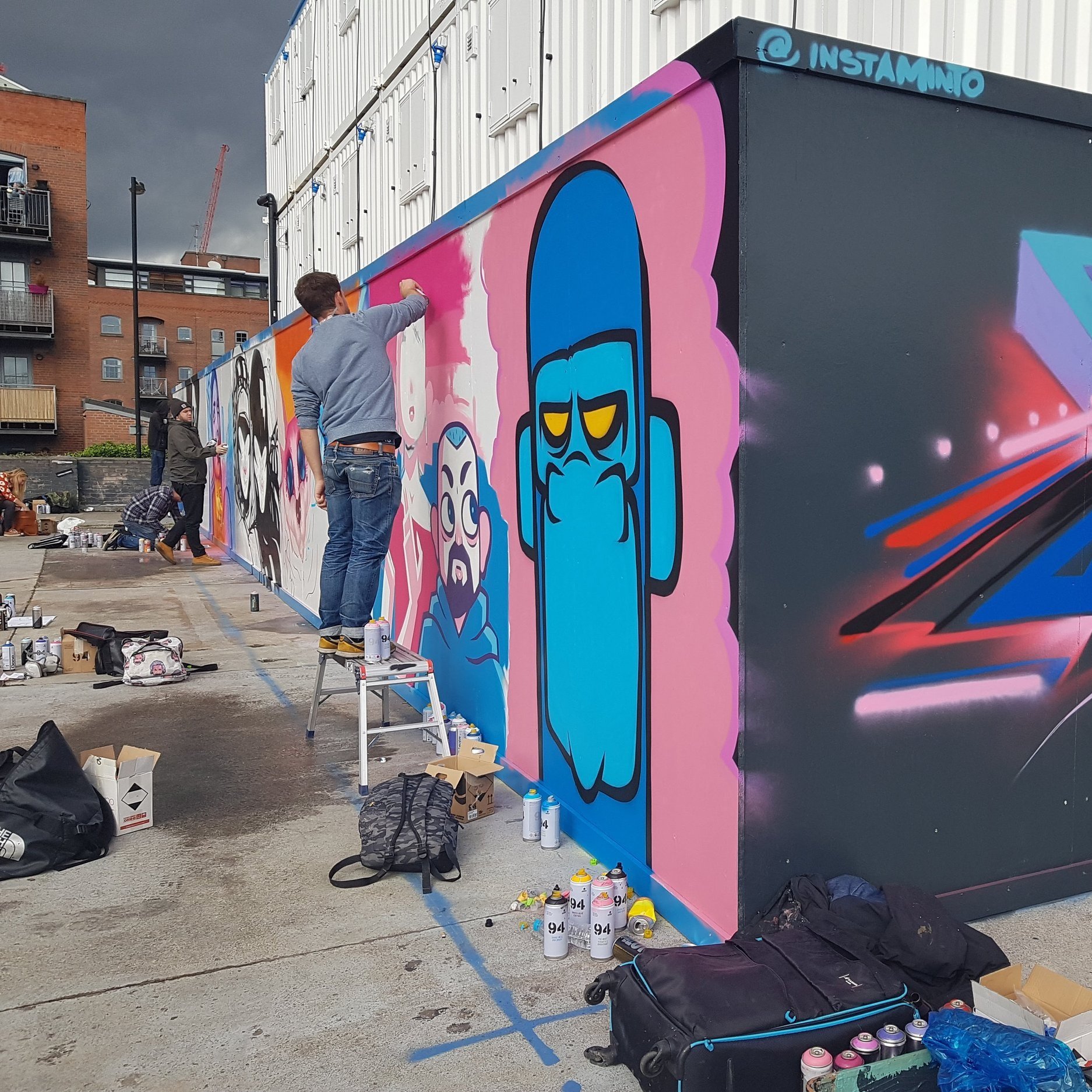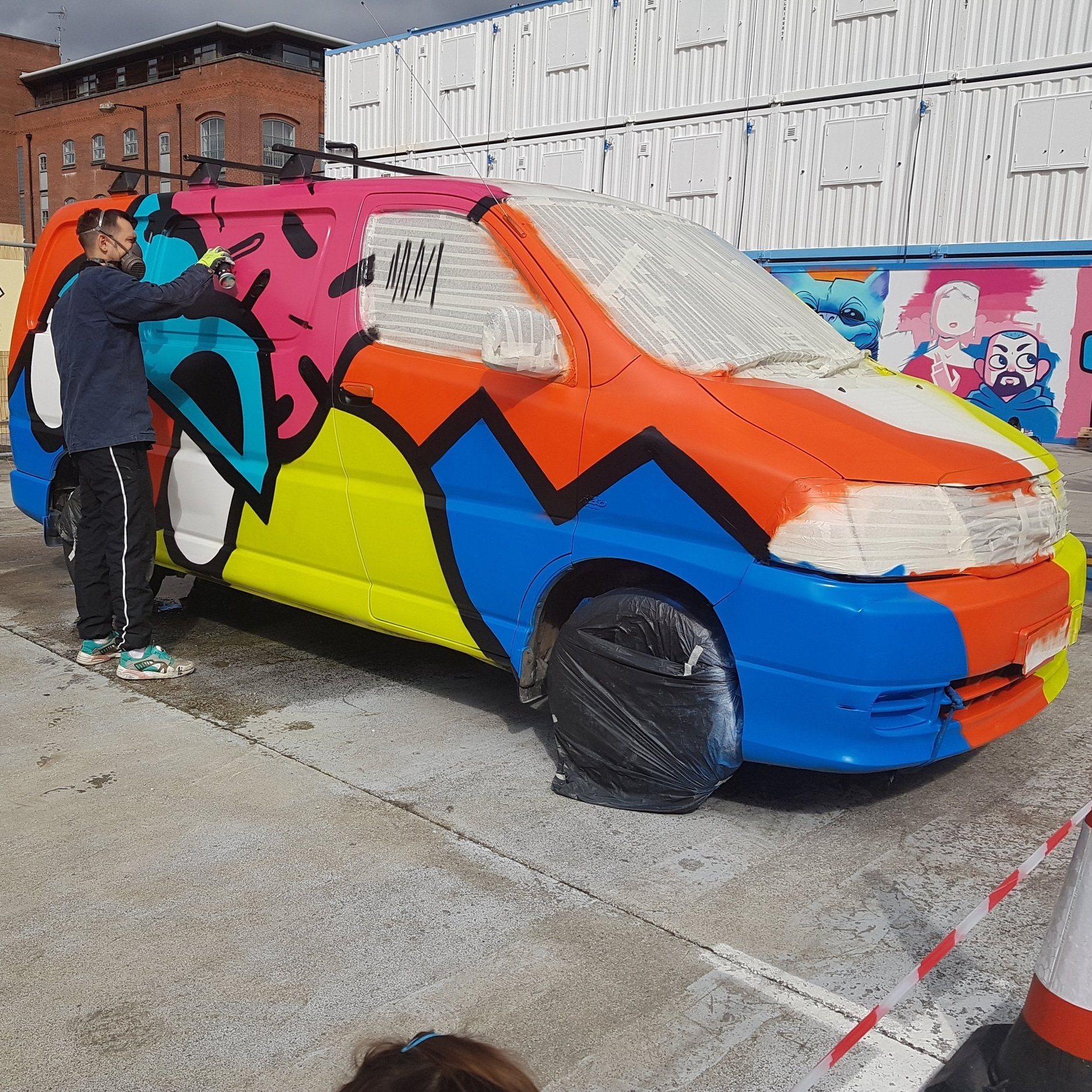
…and the extraordinary man who uncovered it.
The bombed out church, St Luke’s, stands at the top of Bold Street in Liverpool. The official name is St Luke’s in the City and was nicknamed the Doctor’s Church because of neighbouring Rodney Street which houses all the consultants and doctors in the area. St Luke is the patron saint of surgeons, physicians, and artists - fitting even more now that Ambrose Reynolds, original member of Urban Strawberry Lunch, is artist in residence at the church building and runs regular events in the venue including art installations and film screenings.
“We see ourselves as kind of guardians of this church; protecting it, stopping it from falling down, we try and make it a little bit better every day. We do out best with the garden. Even the rain water we’ve collected in the crypt that goes into here - every problem is turned into a solution. That’s very much the way we work.”

St Luke’s was bombed on 5th May during the 1941 May Blitz in Liverpool in an attempt to shut the port city down; shutting down the ports effectively shuts down the country. Ambrose tells me that churches were targeted to demoralise the residents. Twelve other churches were bombed; six were demolished, six were rebuilt and St Luke’s was abandoned and left as it was - a roofless cavern with grass in place of tiles and trees growing where supporting pillars would be.
The beams, burned to a cinder, can still be spotted in parts of the structure blackened and torn apart. It was the burning beams that caused the roof to cave in, not the impact of a bomb itself, which is why so much of the rest of the church remains standing.
In the original bell tower, right above our heads, a beam juts out from one wall and has hung precariously there for seventy-two years. Ambrose, with an insouciant attitude to health and safety laughs and eventually suggests we stand somewhere else just in case.
St Luke’s was famous for its bells, especially how they were framed - the first metal bell frame in the world. The bells were named Peace and Good Neighbour and they first rang out on 23rd April 1831 (shortly thereafter the neighbours lodged a complaint for disturbance of the peace).
Today, the bells are replaced by recovered alloy wheels (which you can hear chime at the end of the recording at the beginning of the article).

There are parts lying around in the bell tower that are largely unrecognisable, relics propped up against a crumbling wall.
AR: “These are original beams and bits that we’ve found. I think this is a part of a chair. That’s part, I think, of the original clock mechanism. The clock stopped at three thirty in the morning, which is when it was bombed. The bells came tumbling down and cracked and they were taken away to Manchester and stored until the 50s/60s and then they were sold as scrap. Makes you sick, doesn’t it.”

As we walk back into the centre of the building Ambrose points out the art displayed in the long grass and as we come along a pathway to a pond decorated with flowers and painted tyres he explains how it was made in the 1970s by a job creation project, a project that he himself was involved in; his first encounter with the building he became so fascinated with.

AR: “This was put in the 1970s…they did the pathwork as well and we think it was the consecration stone that was originally here. We didn’t know there was a pond there for ages and realised it rained a lot and left a soggy mess there, we got young offenders in and they cleaned it out and it was full of human waste, junky needles, dead rats and clothes. It’s our reservoir as well because there’s no water - when the church was bombed the water main was bombed at the same time, it burned for seven days and nights. So we have no water right now and we haven’t had water for seventy-two years.”
Scattered around the building are very minute elements which have defied the odds to survive - in the very corners of the windows two angels painted on the glass remain despite the bomb, the fire, and the onslaught of stones children have thrown at them.

AR: “These windows in the middle, some of these were still intact when I was a boy in the 60s and 70s and one of my earliest memories is these lads who were throwing rocks through them - my mum would box their ears. And that’s kind of when I got a bit obsessed with the building.”
So the windows were intact even after the bomb?
AR: “There were actual figures intact in the middle. I know the elderly gentleman who was the one who put in the last set of windows in the cathedral in the 80s; he was ‘Mr Stained Glass’ and he came in and it took him about an hour to get from the door to here and he said ‘decommission these windows’ and he wrapped them up in brown paper and string and took them off to Manchester where all things Scouse end up. So those windows are still somewhere. On some Russian millionaire’s yacht by now but they still exist. But he missed those two angels.”
Exploring the structure is fascinating, as it Ambrose’s dedication and struggle to keep the light of life burning there but today I’m here with the sole intention of exploring underneath the church, in the newly uncovered crypt, and to meet the man who unearthed it…
Authors and their Inspiration.
My fourth appearance on the BBC, this time I’m there to discuss cities as inspiration to authors.
We briefly talk about the dark romance of Preston bus station as well as finding time to research and write.
A quick update to go someway to explain the lack of new posts lately.
Firstly, there’s Porto - a wonderful city, culturally and architecturally, where I had the pleasure of spending some time lately (click on the photos above for a large slide show view. I hope these demonstrate the nuances between the traditional and intricate ceramic tiling of the city, the pockets of Parisian and Cuban influence, and the handful of modernist developments. It’s a city where the likes of Ian Simpson are banished, or at least re-educated, and it’s as pretty as can be).
Secondly, there’s big Skyliner news - a book! It’s not a book deal per se, more a book that was looking for an author, and I’m pleased to say it found me.
Thirdly, there’s life and work and all the threads that hold the two together (including two more BBC appearances this month and taking on yet another blogging assignment for Heritage Open Days).
Anyway, I’m not much of an enthusiast when it comes to detailing my personal comings and goings and much prefer to hide behind my mask that is Skyliner, so to wrap up - I decided to revive my dusty old film camera for my trip to Porto and ever since I’ve been sucked back into a deep and complex (expensive and confusing) love affair with it, as such I’m keen to get out practicing with it as much as possible which means the scheduling of some more regular features.
Skyliner will resume normal service before you know it.
All images by Skyliner.
City or Country Life?
My third interview with the BBC - this time I’m there to argue the case for city living. Towards the end of the interview I talk a lot about Skyliner and the architecture of the city, as well my dismay at Manchester’s approach to heritage, and my love for Liverpool.
I even read out the weather!

A small article originally published in Manchester Art Gallery’s Dreams Without Frontiers publication, curated by Dave Haslam. The theme is Sixties Utopia and my article is about the Piccadilly Hotel (now the Mercure)

What does Piccadilly Hotel mean to you? To George Best it’s hiding in a cleaner’s cupboard from Matt Busby. To the ears of the city its cantilevered form straddles the headquarters of Piccadilly Radio. It’s a hotel built only for cars. It’s the future suspended in the 60s.
Piccadilly Hotel (to eventually become the Mercure) has no ground floor pedestrian entrance - because this is the future and why walk when you have a car. A vast William Mitchell mural made of broken pianos spans four whole floors of the stairwell because art and architecture go hand-in-hand in the future.

William Mitchell constructing the mural
One face of the decade’s utopia is Simon Dee who filmed the end credits of his talk show Dee Time on the concrete car ramp of the hotel. In his convertible Jaguar, with a model on his arm, Dee spins down the concentrically-looping concrete ramp with the insouciance of a man with no troubles. And in the 60s he had none. Dee’s 60s were his dreams; no frontiers. From his beginnings in pirate radio his career spiralled ever onwards and his lifestyle became one of a playboy. His 60s are forever captured in a bell jar of parody by way of the film Austin Powers, based on Dee himself.
Dee Time closing credits
And as he hits the road and waves goodbye to the crowd at the foot of the ramp, upstairs Albert Finney (Charlie Bubbles, 1967) lays supine on a bed, outside Julie Christie strolls across the concrete mega-structure (Billy Liar, 1963), and everybody else? They turn a blind eye to the fact that the ceiling collapsed twice during the opening ceremony because this place, this hotel, is promised to be the greatest hotel in all of Europe.

Julie Christie, Billy Liar. City Tower in the background.
Manchester Art Gallery and Dave Haslam present Dreams Without Frontiers; a publication to accompany the current exhibition.
Skyliner contributed an article under the themes Sixties Utopia, focussing on Piccadilly Hotel. There are contributions from a range of wonderful people including Maureen Ward, Julie Campbell, Dan Russell, and Greg Thorpe. Greg is responsible for one of my favourite regular columns: Manchester in Residents, over on his blog Manhattanchester.
Make sure to pick up a copy from the gallery.
Skyliner in The Skinny. A favourite read of mine whenever I visit Glasgow, The Skinny launches in the North West tonight at 2022NQ.
I was interviewed for piece titled What’s Your Northwest, along with a collection of other people involved in the region’s art scene.
You can read the full, unedited interview below (which might give you some insight into what the future of Skyliner will be) or read the full magazine on the above link, or pick up a copy around town.
TS. What first made you curious about exploring Manchester and the region in the way that you do? How did you get into doing what you do?
S. Looking for the back story of a street, building or artwork started in an old job when I would take the office dog for a walk at lunchtime, the same route everyday soon became boring so I’d look for interesting architectural features around me then investigate them that evening. Soon I became so engrossed in what I was doing that I quit my job and decided to give myself a year to see what exactly I could achieve from what was to become ‘Skyliner’. I’m working on a project at the moment that follows in the footsteps of a Glaswegian journalist James Cowan who, 100 years ago, did exactly the same thing - he spent his lunch hours looking for unusual parts of his city then researching their origins - and in much the same ilk he too started to take this hobby more and more seriously until he was offered a regular column on a newspaper publishing under the guise ‘Peter Prowler’.
TS. And what’s your favourite thing about what you do - what motivates you to keep doing it?
S. Knowing the story of a building makes it infinitely more beautiful and you see the city in a new way with each thing you learn; it’s like colouring in a painting. Manchester was my blank canvas when I first came here and it remained that way for several years, just a corner of the canvas was filled in and it was rudimentary and pencil drawn. Then I realised that I hadn’t approached the city like I do all other cities; as a tourist – always asking questions about its history, its art, exploring the streets and getting lost in its dead-ends. I did this and my canvas became florid in its detail. I still explore like this everyday because there’s no reason, in any city, for that curiosity to ever wane. Not only that but I have explored lots of new avenues in the metaphorical sense too; I’ve taken on roles that I would never have dreamed of doing and have become an alternative tour guide, a location scout, a curator as well as writing for international publications.
TS. What’s the most unexpected or surprising thing you’ve discovered while exploring Manchester and the region? (Both positive and negative discoveries/surprises?)
S. I’ve seen some remarkable things, and some things that we assume to be unremarkable. From walking into what looks like a bog standard community centre only to discover a baroque music theatre to noticing historical artefacts hidden in plain sight such as fading air raid shelter signs on doorways I’ve walked by a thousand times. I’ve sadly discovered how our heritage can mean so little to those who matter with new developments being put before restoration even when locations are protected, or poor decisions leading to important buildings being left to rot. Intertragal artworks of buildings are ripped out when the buildings are demolished as if they were simply old wallpaper (especially true of post-war buildings). I’ve come to see that empty buildings should be valued in any form - to be open for safe exploration or put to use as art spaces if only to keep them occupied and maintained, but these ideals that cities such as Berlin or Barcelona would be all over are made almost impossible here. When you love a city and make it your business to know what’s going on then you can’t avoid seeing its flaws.
TS. And what’s your most treasured revelation - what are you really glad you found out?
S. In Liverpool I was exploring underground below St Luke’s bombed out church and the crypt that they’d uncovered had buried in it all manner of relics like very old slivers of stained glass and pottery, and the physical space itself was quite beautiful but the man who showed me around was the real treasure. He’d dug out the crypt alone, this was a job that the army said they would help with but he managed it himself and as he took us back to the surface a homeless and very drunk man shouted his name, at which he turned to me and said “that was me 18 months ago”. He had replaced his drink addictions with an addiction for a building, and it had saved him.
TS. What kind of community have you encountered while doing what you do? Are there lots of others engaged in similar pursuits, and are people encouraging of and interested in what you do?
S. There’s a community of people and groups in the city who explore our surroundings through the urban environment in some way; I think both architecture and local history are starting to be seen as something more socially engaging and not just academic subjects. There’s Manchester Modernist Society, Natalie Bradbury of The Shrieking Violet, The Loiterer’s Resistance Movement, The OK Cafe, Creative Corner, Wythenshawe Walker, Phil Griffin, MSA’s Urban Sketchers Group, Andrew Brooks and Andy Crydon of Curated Place, and the RIBA hub on Portland Street.
TS. If you had to choose just five places for people new to the city to visit on a sort of ‘alternative’ tour, what would they be and why?
S.
1. Our city centre island - Pomona, and its dystopian landscape. Sooner or later the plans to turn Pomana into a forest of apartment blocks will become a reality so go and enjoy this strange forgotten part of the city and enjoy the isolation of this rather captivating wasteland.
2. The giant map made of ceramic bricks on the wall of Victoria Station, glistening cream, black and red. This is reminiscent of another time, when railways were the backbone of the country.
3. London Road Fire Station “the finest fire station in this round world”. It’s an amazing building that’s sadly neglected under the ownership of Britannia Group. It’s a lifetime wrapped up in a building; a fire station, housing for the firmen, their families and even the horses, a bar, a bank, a gym, a police station, a courtroom, police cells, and a morgue.
4. The former UMIST campus. In the 60s 1% of building costs were allocated to art so these buildings have some fine pieces of public art inset within them. Hans Tisdall and Victor Pasmore have murals here, and the buildings and landscape itself, on a sunny day, comes as close to walking around in an architect’s sketchpad as you’ll ever get.
5. I’d love to say the curve of Library Walk as it snakes from St Peter’s Square to Mount Street, but sadly this one requires a bit of time travel as it is currently closed to the public whilst it’s glazed over and gated.
TS. If you had to evoke the character of the city you live in in just a few words, how would you describe it?
S. Manchester is a home.
It’s a bit corny but it’s true. The people who seem to hold the city dearest, who spend so much time writing about it, exploring it and being fascinated by it, are those who have moved here from elsewhere. It’s not the cocksure city like the Madchester scene led people to believe; it’s a city championed by the people who have chosen to live here rather than anywhere else and when they’re asked where they’re from they don’t say “well I live in Manchester but I’m from x,y or z” they simply say “Manchester”.
TS. One of the things I love about Manchester is that it seems like people’s love for the city really develops and deepens over time. For a visitor, maybe it’s not the most immediately beautiful or hospitable place - but when people develop that love for it they *really* love it. What are your most-loved aspects of/most-loved places in Manchester and the region?
S. My family are predominantly from Liverpool, and so it’s safe to assume I’m the black sheep of the family in my adoration of Manchester. I love it because I feel like I’ve made it my own. It’s a city where it’s very easy to do that and to carve yourself a place where you slot in and feel at home regardless of your roots. It’s also a challenging city to love because you have to work at it. There’s nothing immediate about it, it’s small yet spread out, it’s unremarkable in many ways, and you certainly don’t get that breath-taking moment of flinging open your window and gazing down on an urban paradise – its not an easy city for a visitor to love.
TS. What’s left to discover? What projects are you moving on to?
S. Although all that I’ve done so far is based in Manchester I’m not bound to the city exclusively; I’m planning to expand my work to cover Liverpool, Sheffield and Glasgow in the coming year. Back in Manchester though - my alternative tours start up again in spring, some of which will be adapted for music festivals including Sounds from the Other City and Portmeirion’s Festival Number 6. I’ll be working with RIBA and Manchester Art Gallery on some architectural festivals, and I have a handful of art projects that I’m hoping to secure funding on - I can’t say too much right now but they involve a very unique bus, a miniature building site, and an art gallery tucked away where you’d least expect it.

In 2012 the CIS tower celebrated it’s 50th year (as well as it being the international year of the Co-Op) and this year the new headquarters at Angel Place will open. In tribute and celebration Skyliner presents an exclusive look at the 1962 commemorative brochure.
Thank you to S.L. Scott for the beautiful artwork in the image above and to the Co-Operative for allowing reproduction of the brochure.

“The Directors of the C.I.S have pleasure in enclosing Commemorative Booklet of that great occasion on 22nd October, 1962, when H.R.H. The Prince Philip, Duke of Edinburgh, K.G., K.T., so graciously opened the new building in the presence of a large number of guests from Home and Overseas.
It is hoped much pleasure will be derived from the contents of this souvenir booklet and that the typescript of what was said on that notable occasion will recall many happy memories.”


“New Head Office premises of the Co-operative Insurance Society Ltd, Miller Street, Manchester, England”

“To the applause of a large crowd that had gathered in Miller Street, Prince Philip, accompanied by Rt. Hon. The Earl of Derby, M.C., Lord Lieutenant of Lancashire, walks to entrance where he was greeted by Messrs. Wild and Dinnage, who accompanied him on his tour of the building.”
“(Top right) The first visit is 60 feet below ground to the Control Room

It’s hard to place City Tower, formerly Sunley Tower, in the brutalist pigeonhole these days. It’s a white beacon of modernism guiding you across China Town, a siren of the 60s beckoning you towards it from its podium behind the classical architecture of King Street. It’s the third tallest building in the city, and remains the highest commercial office space.
And set within its facade is a concrete tribute to the scientific achievements of the city, because look closely - those gable walls are a giant circuit board.

Completed in 1964 it was originally named Sunley

My latest article for the wonderful Now Then - the layout and naming convention of streets. Featuring a housing estate in Chorlton and a series of American grid-style streets in Trafford Park…
There’s a long-vacated wine shop in Chorlton, the exterior of which is flanked by two huge bay windows and the blue frames are that kind of salt-eroded, windswept pastel found only on British waterfronts and in polaroids. Traversing the suburban landscape that surrounds the wine shop the houses begin to take on the same seaside form, it’s subtle and difficult to pinpoint the exact similarities but they’re definitely there and that’s when you notice the street signs: Fairhaven, St Annes, Lytham, Cleveleys, and it’s quite serendipitous but there’s long winding road that wraps around this estate and it goes by the name of Sandy Lane - a tarmac beach. Were these houses designed to mirror the architecture of our seaside resorts or have the streets, like dogs that resemble their owners, taken on the characteristics of the towns they’re named after?
Le Corbusier famously outlined his plans for a new Paris in his manifesto The City of Tomorrow and Its Planning. The streets that had grown from the paths of least resistance, those traced by meandering pack-donkeys during medieval times, were not efficient for modern man. To Le Corbusier the city was a mechanism and neither character nor exploration were necessary components of his well-oiled machine. The streets in his vision were laid out in meticulous order, exact geometry that suited and served the way of man, and not the way of the donkey. Manchester, like much of the UK, is part man and a whole lot of donkey. But not entirely. Some of the order found within the grid layout of new transatlantic cities, their blocks and their numerical naming convention, made it to Manchester.

The water tower of the Westinghouse factory, Trafford Village. Image care of Metropolitan Vickers
In 1886 American owned Westinghouse Electrical Company built besides the Bridgewater Canal on what had been meadows up until the completion of the Manchester Ship Canal. Westinghouse pulled out all the stops to have his enormous factory built in record time along with a model village for his workers. He based his Trafford Park Village on the regimented blocks of America and provided four avenues and twelve streets of housing, small businesses and community centres. Today the streets have been altered somewhat but this grid layout still exists to some degree

New Broadcasting House on Oxford Road was the location of the BBC headquarters for the North-West of England from inauguration on 18 June 1976 until it was demolished during the final months of 2012. Today a small part of the entrance wall still remains, and the road it once straddled is lined with bollards bearing the BBC logo in place of the standard Manchester bee.


The art galleries of a city are larger in number than you first perceive if you look not only to the official institutions but to the galleries that are formed in the corridors of hotels and the stairwells of office blocks.
One particularly exhaustive collection in the city is that of The Midland Hotel’s Wyverne Restaurant. Here in the Wyverne (every Midland hotel has a Wyverne restaurant) is the work of photographer Eadweard Muybridge.
The launch of Streetview is Friday, 25th Jan. Come down from 6pm and join us for the party. [See photos from the night here!]
This is the first time I’ve curated a show and I’m overwhelmed by the press coverage and interest from the public. Overwhelmed but overly nervous, so do come and say hello and share the fun of the evening with me.
BUYING ARTWORK:
If you want to buy a print but didn’t get chance during your visit my shop or if what you like isn’t on there then email: theskyliner.org@gmail.com
EVERYTHING ELSE:
Streetview made the BBC! How exciting. You can take a look at some of the artworks on their ‘In Pictures’ feature here.
Thank you for the support of Ubiquitous who have sponsored the print of 250 event brochures, Sam Swaffield for designing them, Tunnock’s for driving all the way from Scotland with Burn’s Night biscuits for the event, James Travis and Mat Dean of Dots and Loops for giving us music on the evening, 2022nq for hosting the exhibition, Dan Zomack for being the inspiration and face of the event, and all the wonderful friends and artists involved.
The show runs until February 18th, and stay tuned for two frankly ludicrous ideas I have for a further two shows in the coming year.

Mark O’Brien’s sculpture “Church Street Records” for the show

The venue during set-up, thanks to Ahmad Hakym for the image
Wondrous Place very kindly asked a few of this year’s curators back for a quick Christmas special. Each of us had a creative challenge; mine was “You’re a fugitive in your home city - you’ve got 20 minutes to hide. Where do you go…?”
I’m sure that among the collection of complicated minds that are my fellow Wondrous Place curators, I’m not alone when I confess that large chunks of my time are taken up by re-imagining my life as a story. My train of thought that was brought into the world with the sole purpose of deciding which crisps to buy eventually becomes a detective story – it takes only a minute or two for my thoughts to wind up here in my internal mystery, this imaginary film that my life becomes functions like a screensaver for my brain when its attention to the mundane has timed out.
Sometimes detective, other times fugitive, the scenario is still the same but what of the setting? Where in Manchester does my story pan out? Is it in the hidden rooms of an Oxford Road hotel where I chase my leads, or is it along the tow paths of the Rochdale Canal where it becomes lonely and its most ugly that I encounter my assailant?
Today I am a fugitive and I have twenty minutes to find a hide out, and I already know where to go. I start out on the canal, in those parts of it between the cafe culture of Canal Street and the yuppy culture of Castlefield; the parts where only three things decide to settle – crisp packets, used condoms and the burly blue heron that sits one-legged on the corner of Deansgate, the gatekeeper of the detritus. There’s nowhere to hide here.
Where I go is a limbo; a wasteland; an island. My island can be reached within minutes from here.
I leave the canal, cross a small car park and head for the hole in the iron fence. What surrounds me is a strip of railway arches. Some retain a sort of privacy with the remnants of old facades, and in the gloom of these particular arches I am cold to the bone, but the pathway linking each new geometric arc of brick and vanquished industry is lined with thick grass – greener than anywhere else in the city, a miniature meadowland. And finding the guts to walk further into the belly of the railway line, I find myself in brightly decorated caverns whose curved ceilings are pierced with angular reveals of sunlight.

There’s a unicorn down here, no, really. It’s bright pink, and if he’s gone unnoticed for so long then I’m sure that I will too. Beyond him, his graffitied form, there’s a curtain of blue and green – sky and grass, a gateway to the water and to an open stretch of land that is the island itself.

A pathway, broken up by weeds looking like the destroyed yellow brick road, leads along the water away from the city. I know where it leads to, but it’s more than my life’s worth to tell you…


You can also read my answer over on their site, along with my previous posts and those of all the other curators of the project - it’s well worth a browse! Remember to look out for some more familiar names coming up as curators in the new year.
My second piece for Twenty Two - the little-known permanent Eadweard Muybridge exhibition in Manchester.

The totems of Salford University’s Allerton Building, and other works by William Mitchell.
“I don’t give a hoot if you don’t like them, just as long as you look at them”
Whilst on The Crescent in Salford, continue towards Salford University’s Allerton Building and there you will find the striking Minut Men by William Mitchell.
Perhaps the first critique of this concrete trio was by Prince Philip, in 1967 when he opened what was then the Technical College, and exclaimed ‘What the hell is that?”.